 kontakt@washusar.pl
WASHUSAR - WASHUSAR.PL - BOERBOEL DOG KENNEL, Pedigree dogs, dogs, female dogs, puppies
kontakt@washusar.pl WASHUSAR - WASHUSAR.PL - BOERBOEL DOG KENNEL, Pedigree dogs, dogs, female dogs, puppies
BOERBOEL
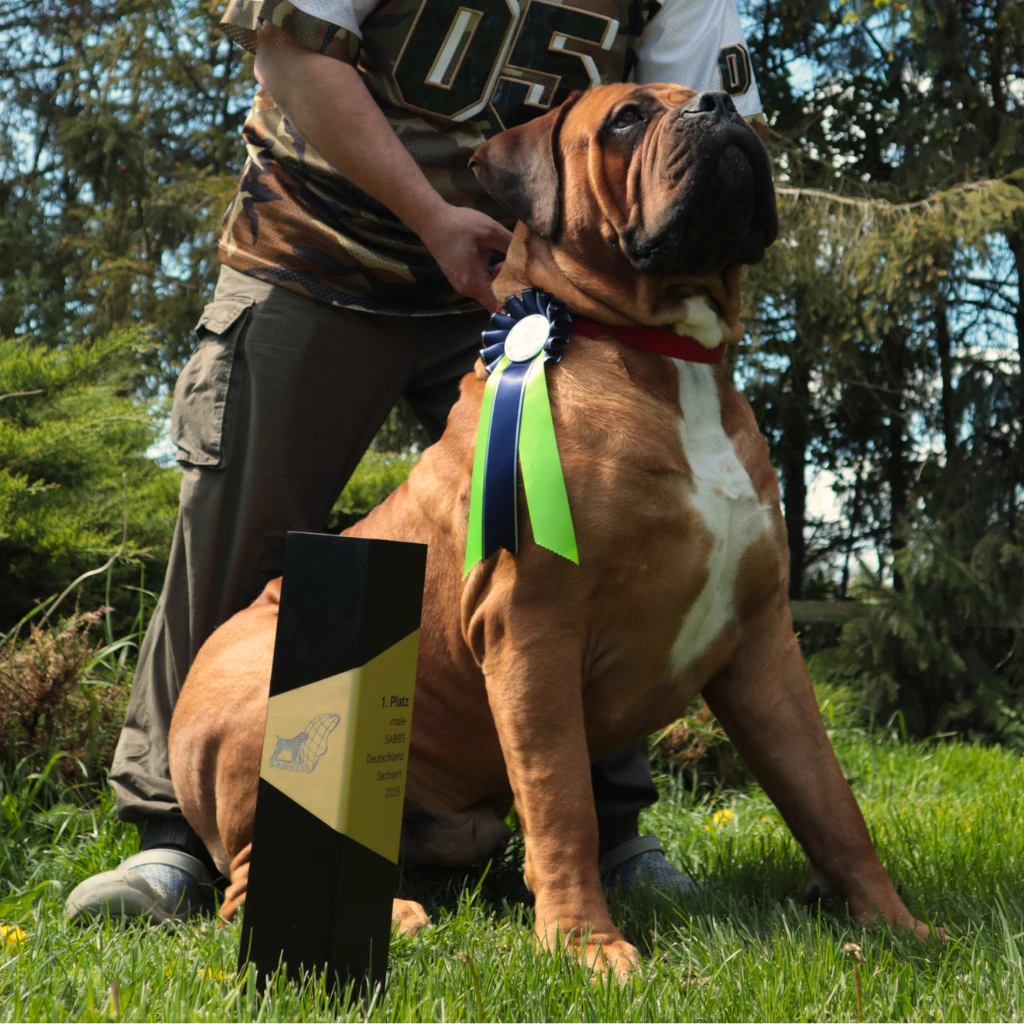
Boerboels possess a calm and balanced temperament. They thrive on the company of their owners and form deep bonds with family members, serving as excellent protectors. These are powerful and massive animals, and raising them requires consistency and significant experience. Read our Boerboel breed description to learn more about these remarkable companions!
CLASSIFICATION
SIZE
COAT
TEMPERAMENT
LIFE EXPECTANCY
SABBS (South African Boerboel Breeders Society) No FCI classification, registration possible in FCI-affiliated associations.
Weight: 55-100 kg
Height: 66 cm, not less than 60 cm (male) / 61 cm, not less than 55 cm (female).
Coat: short, smooth, close-fitting and shiny.
Color: fawn, yellow or red in all shades, solid or brindled.
Composed, devoted, guarding, intelligent, calm.
10-13 years
THE BOERBOEL IS THE SOUTH AFRICAN MASTIFF
He is distinguished by a muscular physique, courage, and unwavering loyalty to humans.
THE ORIGINS OF THE BOERBOEL
The ancestors of today’s Boerboels were powerful Molossers that participated in big game hunting and military expeditions. These animals reached African and European countries along with Roman legions and settlers. Boerboels originate from the Republic of South Africa and are also known as African Mastiffs. They served as guard and protection animals, accompanying their owners.
The Boerboel breed officially began to take shape in 1652, when Dutch envoy Jan van Riebeeck brought a Molosser called a bullenbijter to the Cape Colony. These dogs interbred with the dogs of African tribes. Bullmastiffs imported from Great Britain in 1938 also contributed to the local breed standard.
The first formal Boerboel breeding began much later, in the 1980s. Subsequently, in 1983, the first organization to register dogs of this breed was established in South Africa. The Kennel Union of Southern Africa (KUSA) only recognized the breed in 2008. Boerboels are still not recognized by the FCI; however, they are admitted to shows and can be registered in organizations subject to the FCI.
In Poland, the first Boerboel puppies registered with the ZKwP were born in 2009. Although the breed is not very popular in our country, it enjoys great recognition in countries such as Great Britain, Russia, Belgium, Germany, the Netherlands, and Norway.
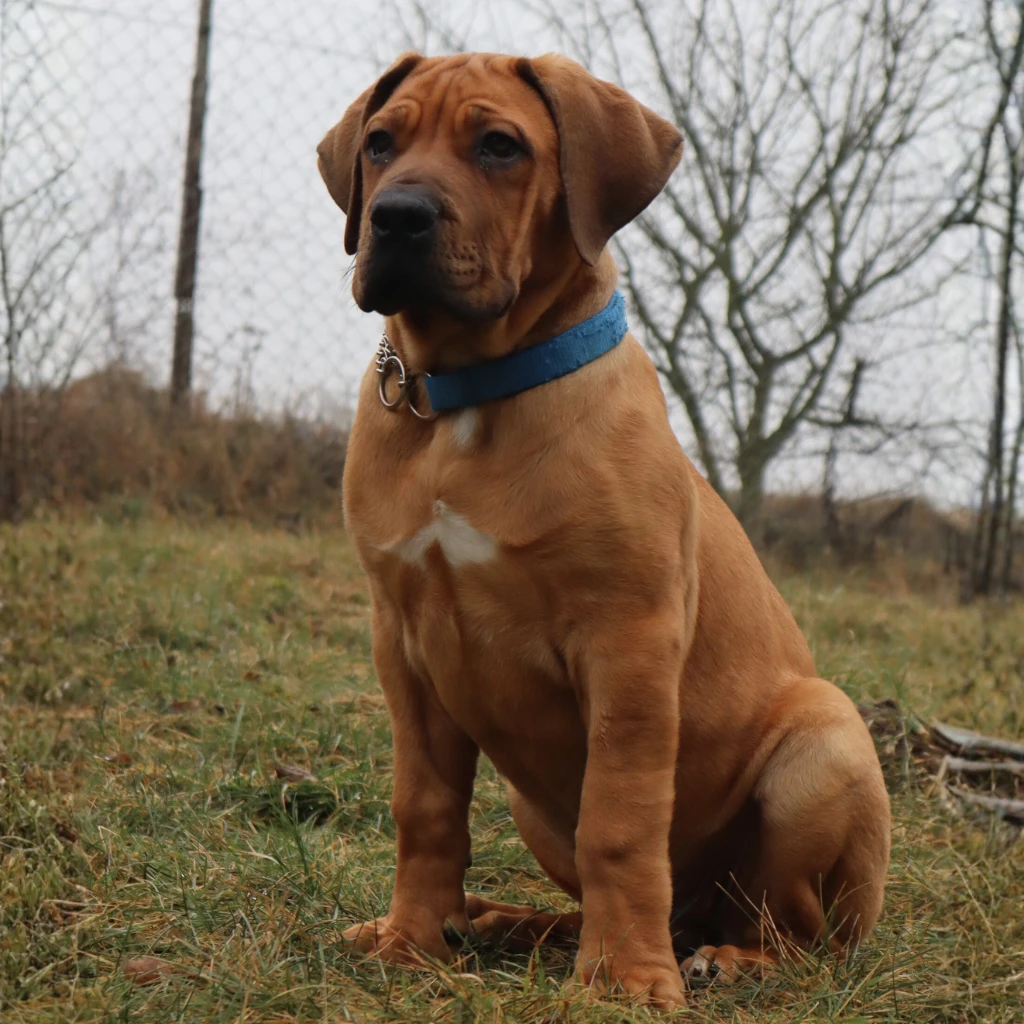
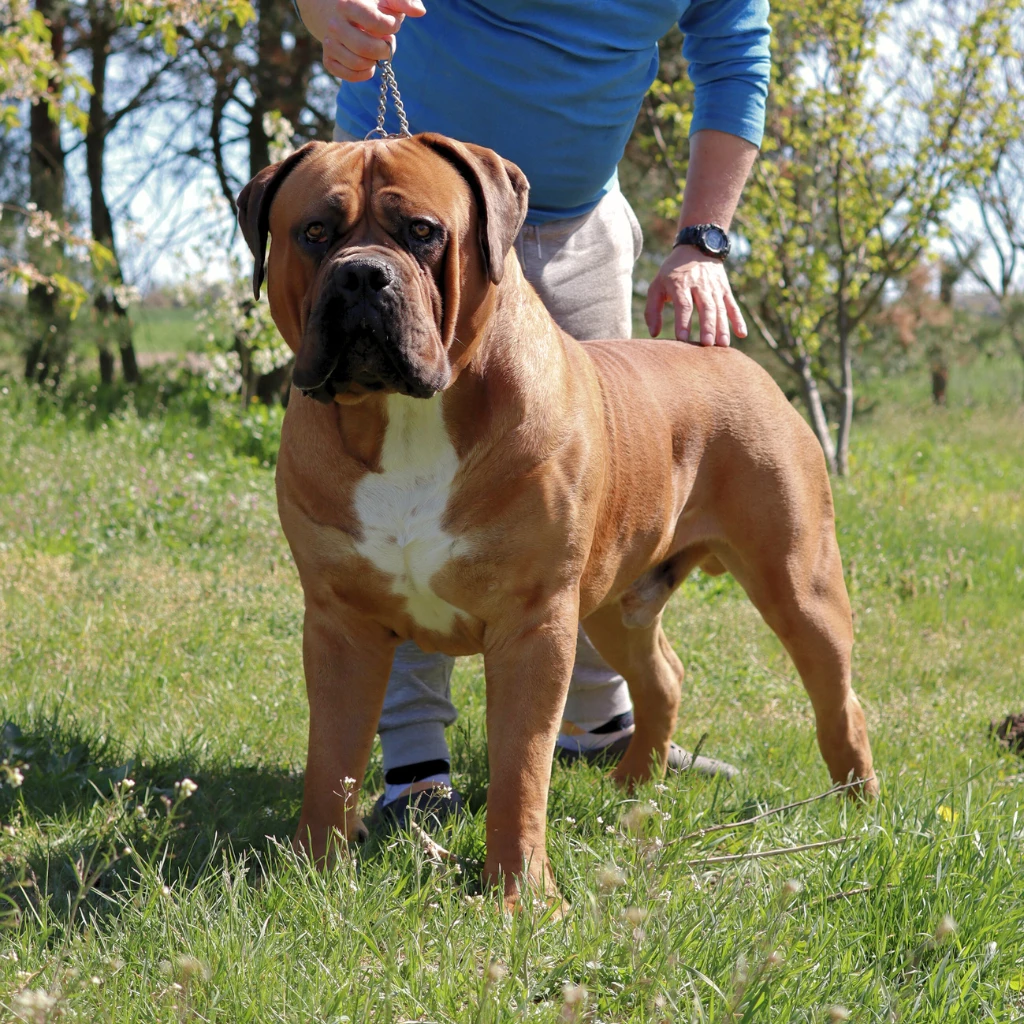
WHAT DOES A BOERBOEL LOOK LIKE?
Boerboels are powerful, well-muscled, and strong dogs. The body mass (weight) of males is approximately 60–100 kg, and sometimes significantly more. The desired height for males is about 66 cm, but no less than 60 cm. Females are slightly smaller, reaching a body mass of 55–80 kg and a height of over 55 cm, with an ideal measurement of around 61 cm.
These animals possess a muscular and massive body with a strong bone structure. The chest is wide and long, and the back is straight, giving the Boerboel a very dignified and courageous appearance. The head is broad and blocky, quite large, but proportional to the torso. Representatives of the breed have high-set, triangular ears that hang down toward the cheeks. Their round, widely spaced eyes come in various shades of brown. The tail is long, straight, and high-set.
The coat is very dense and short, lying smooth against the body. The coat glistens, further highlighting the well-developed musculature. The most desirable colors are fawn, yellow, or red in various shades, as well as brindled. White markings on the paws and chest are permitted but not desired. Furthermore, the SABBS (South African Boerboel Breeders Society) also recognizes black and blue coats. However, since SABBS is not recognized by the FCI, such animals do not qualify for FCI shows.
BOERBOEL - CARE & GROOMING
The short and dense coat of this breed is not difficult to maintain. It is recommended to brush the Boerboel’s fur once a week, for example, using a rubber grooming mitt. The animal requires slightly more frequent brushing during the shedding period. On the other hand, bathing should only be performed when necessary, if the animal gets dirty. In between, the coat can be wiped more often with a soft cloth to remove sand and dust from the shiny fur. The dog’s eyes and ears should also be cleaned regularly. Daily tooth brushing is necessary as well. If needed, the claws should be trimmed if they do not wear down naturally.
BOERBOEL TEMPERAMENT
Representatives of the Boerboel breed are balanced, calm, and exceptionally devoted to all family members. When properly raised, they become faithful guardians, willing to defend their loved ones even at the cost of their own lives. As guard and protection dogs, they feel best in a house with a garden; however, they should not be left alone for extended periods, as they absolutely require human contact. The Boerboel is generally not a noisy dog—it barks loudly, but usually only when necessary to signal a threat.
The Boerboel’s high intelligence and self-control make it a willing and fast learner. It enthusiastically participates in outdoor activities and requires plenty of exercise and attention from its owner. While typically patient and protective toward children and other animals, it must be properly socialized from puppyhood. Due to the dog’s powerful build, play with the youngest family members should always be supervised by adults.
The Boerboel is easy to groom, but it is certainly not a dog for everyone. The animal requires consistent training and a lot of love. It will be an ideal companion for an experienced, confident, and active person who will ensure its proper emotional development. A poorly raised Boerboel can be prone to dominance or even aggression.
BOERBOEL – LIFE EXPECTANCY AND HEALTH
The average life expectancy of a Boerboel is 10–13 years. These animals are healthy, hardy, and highly resistant to adverse weather conditions. Health conditions noted in this breed include eyelid problems and uterine prolapse. As with all large and giant breeds, cases of hip and elbow dysplasia can occur. Furthermore, these dogs are prone to gastric dilatation and volvulus (bloat); therefore, it is crucial to avoid physical activity before and after meals.
NUTRITION TIPS FOR BOERBOEL OWNERS
Representatives of the Boerboel breed are generally not picky when it comes to food. Due to their large size, they should be fed high-quality, complete dog food that ensures the proper development of their powerful muscle mass.
Meals should be served at least twice a day and accurately calculated according to the animal’s energy requirements. Any treats given to the dog must also be included in the daily calorie balance. They should provide a maximum of 10% of the daily energy intake. It is also important to remember that large breed dogs must not be fed immediately before or after physical activity. This would expose them to life-threatening gastric dilatation and volvulus (bloat). The animal should rest for at least half an hour before a meal and one hour after.
